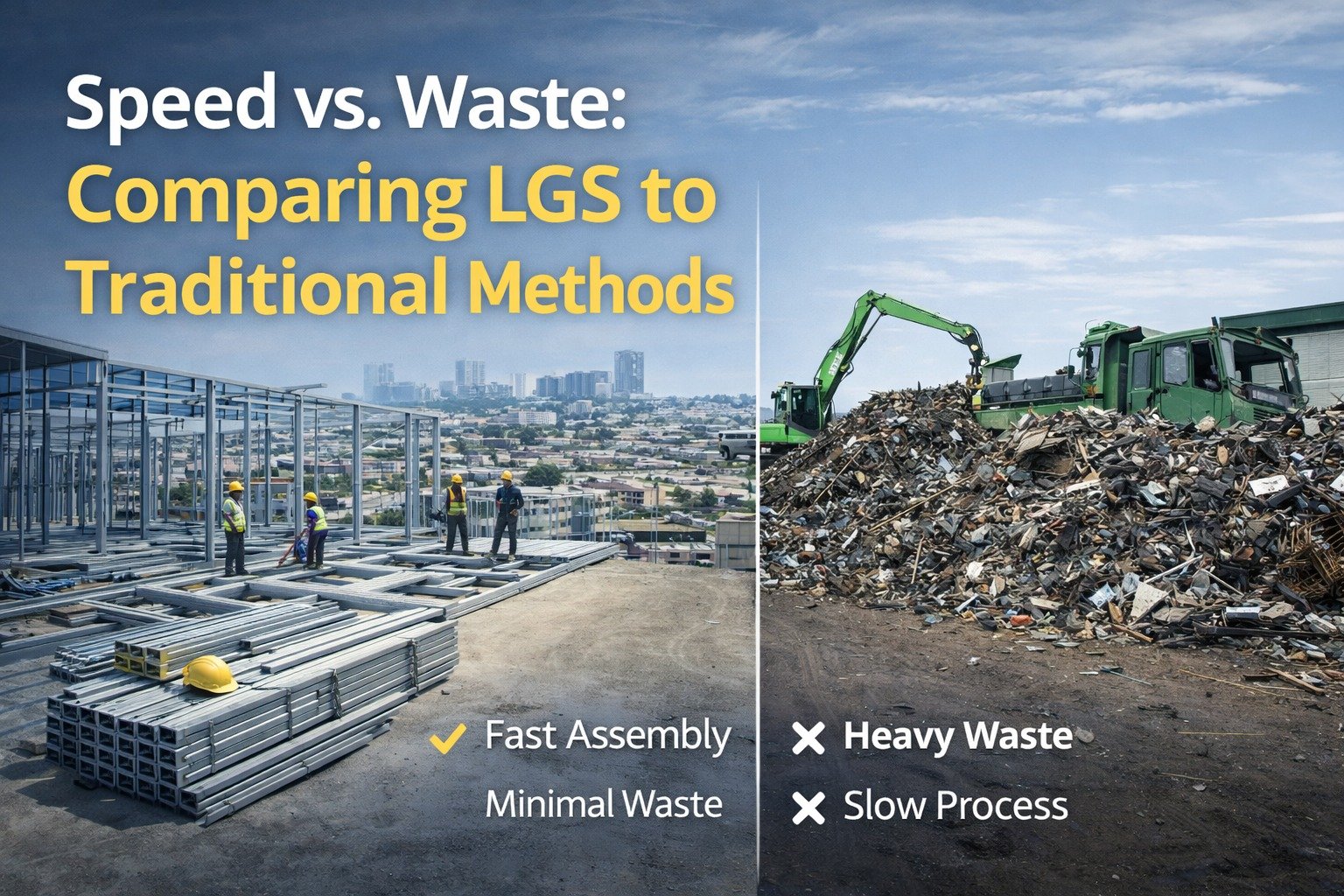
A detailed comparison of construction timelines and material waste between Light Gauge Steel and conventional concrete/masonry construction.
When evaluating construction methods, two factors consistently emerge as critical concerns: time and waste. Light Gauge Steel construction offers compelling advantages in both areas compared to traditional concrete and masonry methods.
Construction speed is where LGS truly excels. A typical residential villa built with LGS can be structurally complete in 4-6 weeks, compared to 4-6 months for traditional construction. This acceleration comes from the factory-controlled prefabrication process — while site preparation is underway, all steel framing is being manufactured to precise specifications.
The just-in-time delivery of pre-assembled wall panels, floor joists, and roof trusses means that on-site work focuses purely on assembly rather than fabrication. Trades can follow immediately behind the steel erection, with MEP rough-in, insulation, and cladding proceeding in rapid sequence.
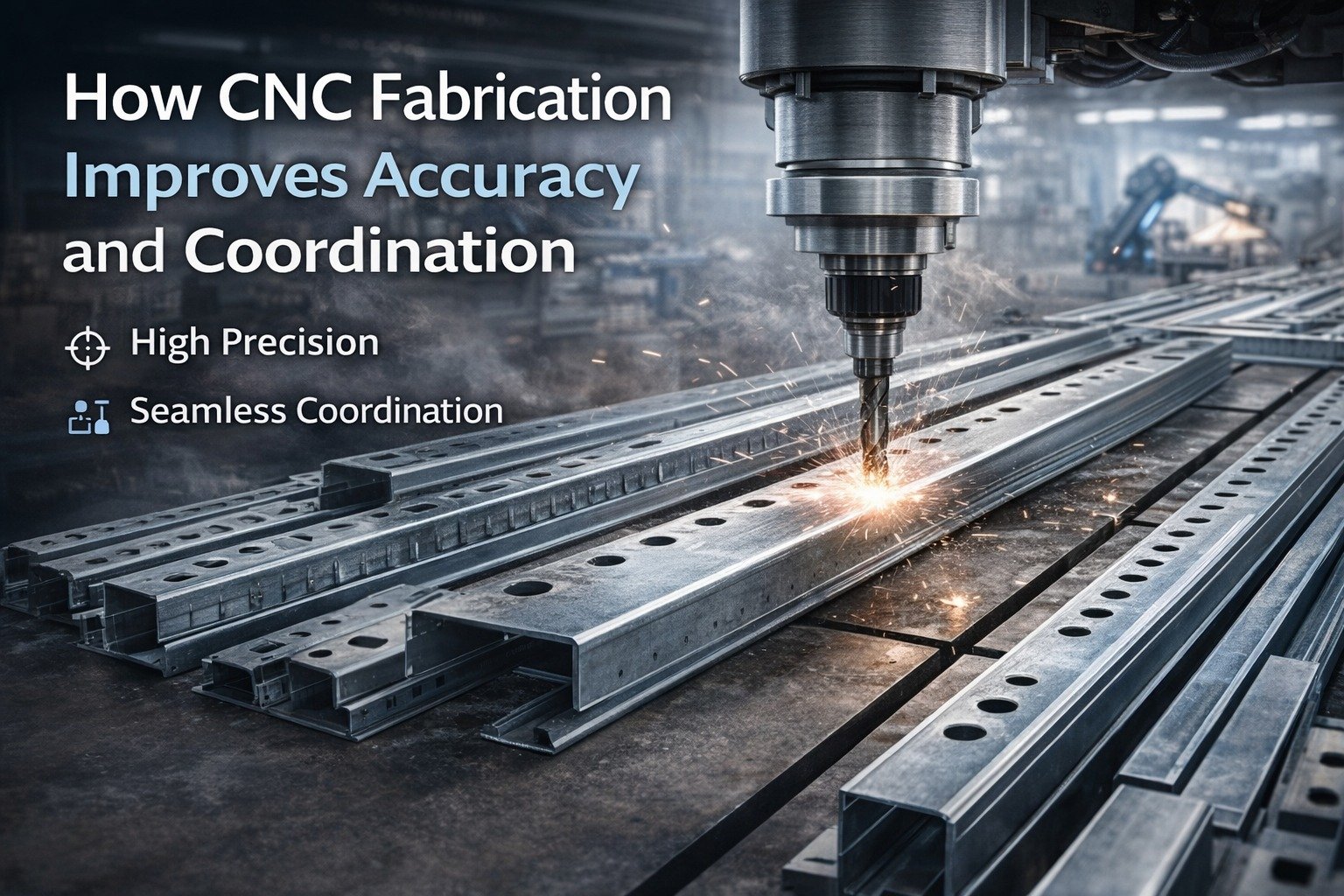
Material waste presents another stark contrast. Traditional construction typically wastes 10-15% of materials through cutting errors, damage, and overordering. LGS fabrication, guided by CNC machinery and optimized nesting software, reduces waste to under 2%. Every cut is precise, every component is accounted for in the production files.
The environmental implications extend beyond material savings. Faster construction means shorter equipment operation periods, reduced energy consumption, and less disruption to surrounding areas. The steel itself is 100% recyclable at end of life, unlike concrete which typically ends up as construction debris.
For developers and homeowners in Jordan, the choice increasingly favors LGS when project timelines and sustainability are priorities. The initial perception that LGS costs more is often reversed when accounting for reduced financing periods, lower waste disposal costs, and faster time-to-occupancy.